UK Mountains: Your Complete Directory of Peaks by Height
Looking for UK mountains by height, range or region? We've mapped every named summit over 600m across England, Scotland, Wales and Northern Ireland — from Ben Nevis at 1,345m to the Lake District fells. Whether you want the tallest mountains in the UK, the mountain ranges of England, or the closest mountain to you, this directory has the answer.
Key Takeaways
- Ben Nevis (1,345m / 4,413ft) in the Scottish Highlands is the highest mountain in the UK.
- The three highest peaks in the UK — Ben Nevis, Ben Macdui (1,309m) and Braeriach (1,296m) — are all in Scotland.
- UK mountains are classified by several systems: Munros (Scottish peaks over 3,000ft), Marilyns (150m+ prominence), Corbetts, and Hewitts — so "how many mountains are there in the UK" depends on which classification you use.
- The main mountain ranges of England include the Lake District (Scafell Pike, 978m) and the Pennines; Wales has Snowdonia/Eryri (Snowdon/Yr Wyddfa, 1,085m).
Mountain Ranges of England, Scotland, Wales & Northern Ireland
Britain's high ground isn't evenly spread — it clusters into a handful of named ranges. Knowing where each one sits makes it easy to find a mountain in the UK near you.
- Scottish Highlands — the Northwest Highlands, the Grampian Mountains (including the Cairngorms), and the Southern Uplands. Home to Ben Nevis (1,345m) and the majority of the UK's Munros — summits over 3,000ft (914m).
- Snowdonia / Eryri — Wales' main mountain country, home to Snowdon/Yr Wyddfa (1,085m) and Cadair Idris (893m). [Source: Ordnance Survey]
- Lake District & Pennines — the principal mountain ranges of England. The Lake District holds Scafell Pike (978m), England's highest peak; the Pennines run from the Peak District north to the Scottish border.
- Brecon Beacons / Bannau Brycheiniog — South Wales upland range, popular for accessible walking.
- Mourne Mountains — Northern Ireland's highest range, home to Slieve Donard (850m).
A summit generally needs to reach around 600m (2,000ft) before it's widely accepted as a mountain rather than a hill. That's why lowland areas like Kent and London have hills, not mountains — the closest mountain to you may be further than you think.
We've mapped every named summit over 600m so you can browse UK mountains by height, filter by region, or search for mountains near me. For the complete ranked list with heights, classifications and walking guides, visit our UK mountains directory.
Featured UK Mountain Guides
Dive into in-depth guides covering peak difficulty, best routes, parking information, safety tips, recommended seasons to climb, and nearby activities. These guides help beginners and experienced climbers explore UK mountains confidently.
 Munro
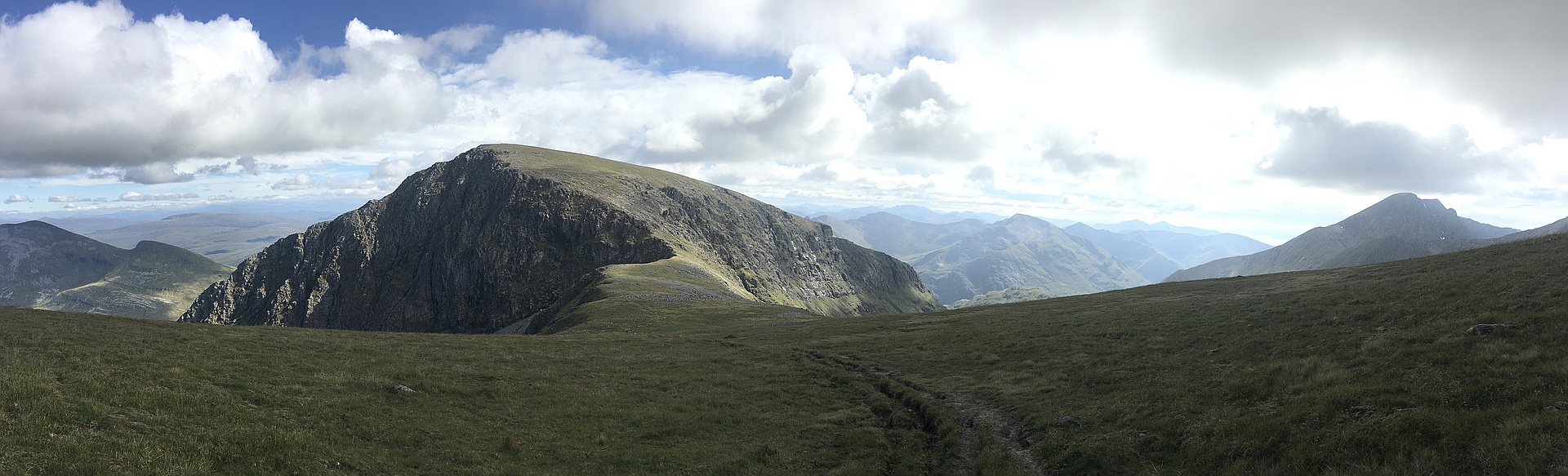
Munro An Teallach
An Teallach is considered one of Scotland's finest mountains, with a spectacular ridge featuring dramatic pinnacles. The...
 Munro
Munro Aonach Beag
Despite its name meaning "little ridge", Aonach Beag is the seventh highest mountain in the British Isles at 1,234 meter...
 Munro
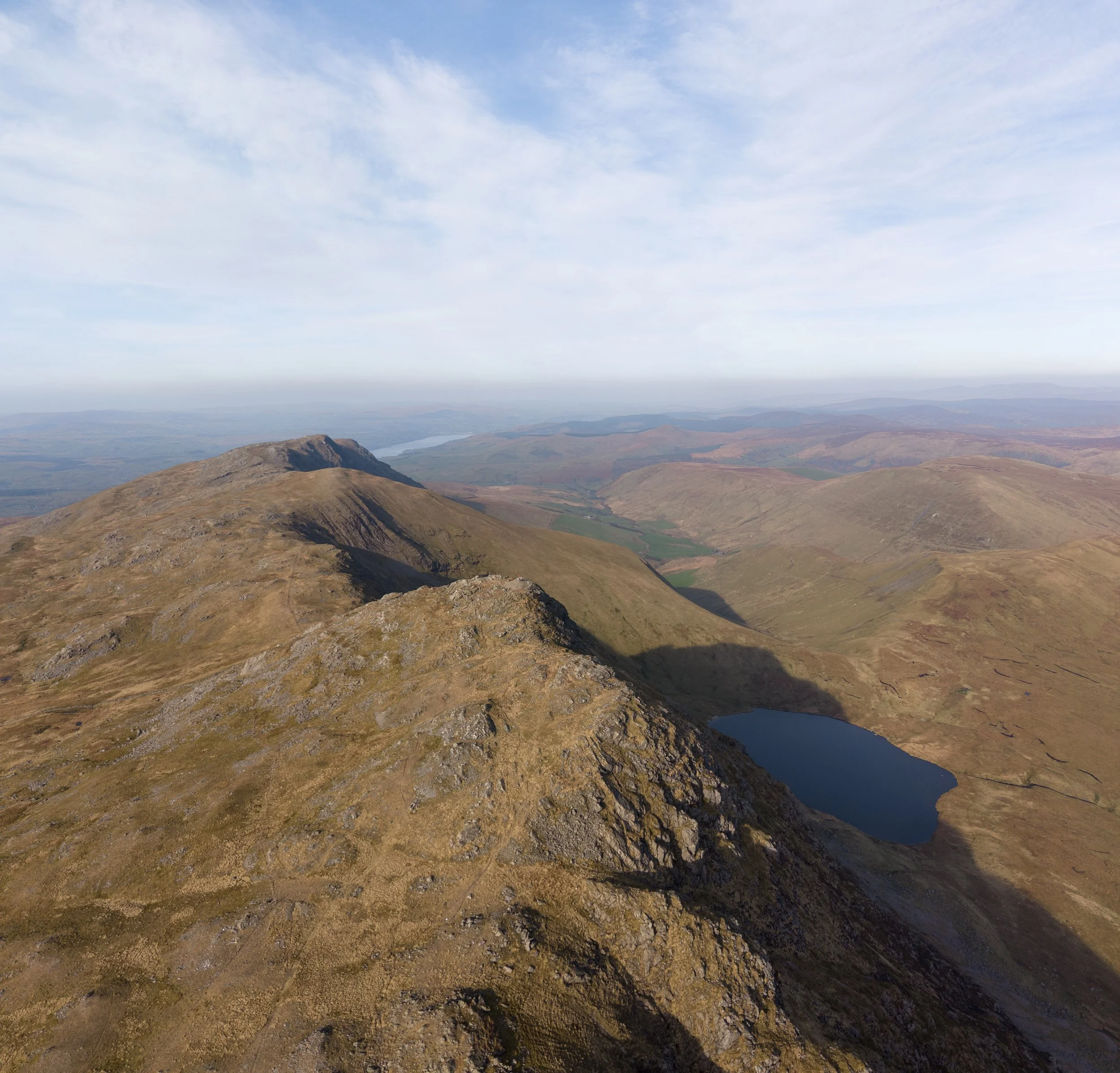
Munro Aonach Mòr
Aonach Mòr is Scotland's eighth highest mountain. A ski resort operates on its slopes, and the Nevis Range gondola provi...
 Hewitt
 Aran Fawddwy
Aran Fawddwy is the highest peak in the Aran range and southern Snowdonia. The mountain is more remote and less visited ...
 Munro
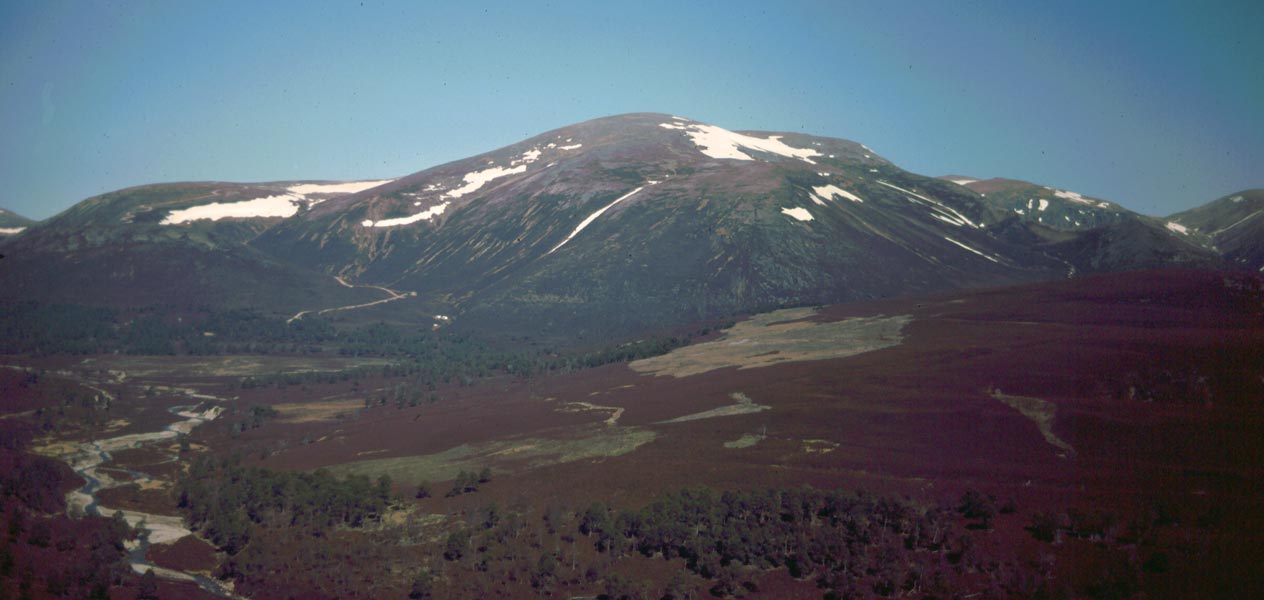
Munro Beinn a Chlachair
Beinn a' Chlachair is a remote Munro in the Monadhliath region. It offers superb mountain walking in a wild and quiet ar...
 Munro
Munro Beinn a' Bhuird
Beinn a' Bhuird has a massive plateau summit with huge granite cliffs on its northern face. It's one of the remotest Mun...
Beginner-Friendly UK Mountains
Not every mountain in the UK requires technical skills or specialist gear. If you're searching for mountains near me with straightforward paths and gentler gradients, these accessible summits are a great starting point.
The Three Highest Mountains in the UK by Height
The 3 highest mountains in the UK are all in Scotland, and each sits in a different part of the Highlands. Ben Nevis towers 36m above Ben Macdui — a bigger gap than separates any other adjacent pair in the UK top ten.
| Rank | Mountain | Range | Height |
|---|---|---|---|
| 1 | Ben Nevis | Grampian Mountains | 1,345m |
| 2 | Ben Macdui | Cairngorms | 1,309m |
| 3 | Braeriach | Cairngorms | 1,296m |
Source: Ordnance Survey
Beyond the top three, the tallest mountains in England are led by Scafell Pike (978m) in the Lake District, while Snowdon/Yr Wyddfa (1,085m) is the highest in Wales. For the full ranked list of mountains in the UK by height, browse our directory.
Frequently Asked Questions
What are the highest mountains in the UK?
The highest mountains in the UK include Ben Nevis (1,345m), Snowdon (1,085m), and Scafell Pike (978m), with full rankings available in our directory. Ben Nevis in Scotland is the tallest peak in the entire United Kingdom, while Snowdon is the highest in Wales and Scafell Pike tops England's peaks.
Where can I see the highest mountains in the UK in order?
You can view a complete ranked list of the highest mountains in the UK in order on our dedicated mountains page. Our directory includes detailed height information, location data, and climbing difficulty for each peak, making it easy to plan your next mountain adventure.
What is the best UK mountain for beginners?
Easier beginner-friendly mountains include Pen y Fan in Wales, Catbells in the Lake District, and Mam Tor in the Peak District due to clear paths and gentler gradients. These mountains offer stunning views without requiring technical climbing skills, making them perfect for families and first-time hikers.
What equipment do I need to climb UK mountains?
Basic equipment includes hiking boots with good ankle support, waterproof layers, navigation tools (map and compass or GPS), water, snacks, and safety gear including a first aid kit and emergency whistle. Winter climbs may require crampons, ice axes, and additional winter clothing. Always check the weather forecast and inform someone of your plans before setting out.
Are UK mountains safe for children?
Yes—many lower peaks are family-friendly, but always check weather conditions and route difficulty before climbing. Mountains like Pen y Fan, Catbells, and the lower Lake District fells offer excellent family hiking opportunities with well-maintained paths and manageable distances. Start with easier peaks and gradually build up to more challenging climbs as children gain experience and confidence.
What is a Munro and how many are there?
A Munro is a Scottish mountain over 3,000 feet (914.4 meters) in height. There are 282 Munros in Scotland, named after Sir Hugh Munro who first catalogued them in 1891. Completing all Munros, known as "Munro bagging," is a popular challenge among hillwalkers and mountaineers.
When is the best time to climb the highest mountains in the UK?
Summer (June-August) offers the most stable weather and longest daylight hours, making it ideal for climbing the highest mountains UK has to offer. However, spring and autumn provide fewer crowds and beautiful scenery. Winter climbing requires advanced skills and specialized equipment but rewards climbers with spectacular snow-covered landscapes.
Do I need permission to climb UK mountains?
Most UK mountains are accessible under Right to Roam legislation (England and Wales) or Scottish Access Rights. However, some areas may have temporary restrictions during deer stalking season (August-October in Scotland) or for conservation reasons. Always check local access information and respect any closure notices or private land restrictions.
How many Munros are in England?
None. A Munro is defined specifically as a Scottish mountain over 3,000ft (914.4m), named after Sir Hugh Munro, who catalogued them in 1891. England's mountains are classified separately — mainly as Wainwrights (Lake District) or Hewitts — so "Munros in England" isn't a category that exists, even though it's a common search.
What are the main British mountain ranges?
The main ranges are the Grampian Mountains and Cairngorms in Scotland, Snowdonia in Wales, the Lake District fells and the Pennines in England, and the Mourne Mountains in Northern Ireland. Each has its own classification system.
Is there a mountain in Kent or London?
No. South East England, including Kent and Greater London, is predominantly lowland. The highest point in Greater London is Westerham Heights (245m), and the highest in Kent is Betsom's Hill (251m) — neither meets any working definition of a mountain. The closest genuine mountain country to London is the Peak District (roughly 3 hours by car) or the Brecon Beacons in Wales (about 3.5 hours).
Where are the UK's mountains on a map?
The UK's mountains cluster in four main areas: the Scottish Highlands (including the Cairngorms and Grampian ranges), Snowdonia/Eryri in Wales, the Lake District and Pennines in England, and the Mourne Mountains in Northern Ireland. The Southeast and East of England are mostly lowland with no mountains.
How many mountains are in the UK?
There are 282 Munros (Scottish peaks over 3,000ft), 222 Corbetts (2,500–3,000ft with 500ft prominence), and 1,556 Marilyns (peaks with 150m prominence) across Britain. Including all classifications and smaller hills, the UK has several thousand named summits.
What counts as a mountain in the UK?
There is no single legal definition. The most widely used threshold is 600m (approximately 2,000ft) — anything below that is generally considered a hill. However, classifications like Marilyns (150m prominence) and Munros (3,000ft in Scotland) use different criteria, so a summit can be a Marilyn without being a Munro, and vice versa.
Explore More UK Outdoor Directories
Beyond mountains, the UK offers incredible nature reserves, woodland walks and Yorkshire Dales routes. Discover your next outdoor adventure.
Nature Reserves
Browse 49 National Nature Reserves across the UK, from coastal wetlands to Highland wilderness.
Explore Reserves →Woodland Walks
Discover peaceful woodland walks near you, from ancient bluebell woods to community forests.
Find Woods →Yorkshire Dales Walks
Find the best walks in the Yorkshire Dales, from Swaledale to Wensleydale and the Three Peaks.
Browse Dales Walks →